The growth paradox: why scaling your MSP creates chaos
10
Every MSP wants to grow. Far fewer are ready for what growth actually does to an operation that runs on people and gut-feel. Here is the paradox: the very growth you chased is what makes the business harder to run. More clients, less control.
Demand is not the bottleneck
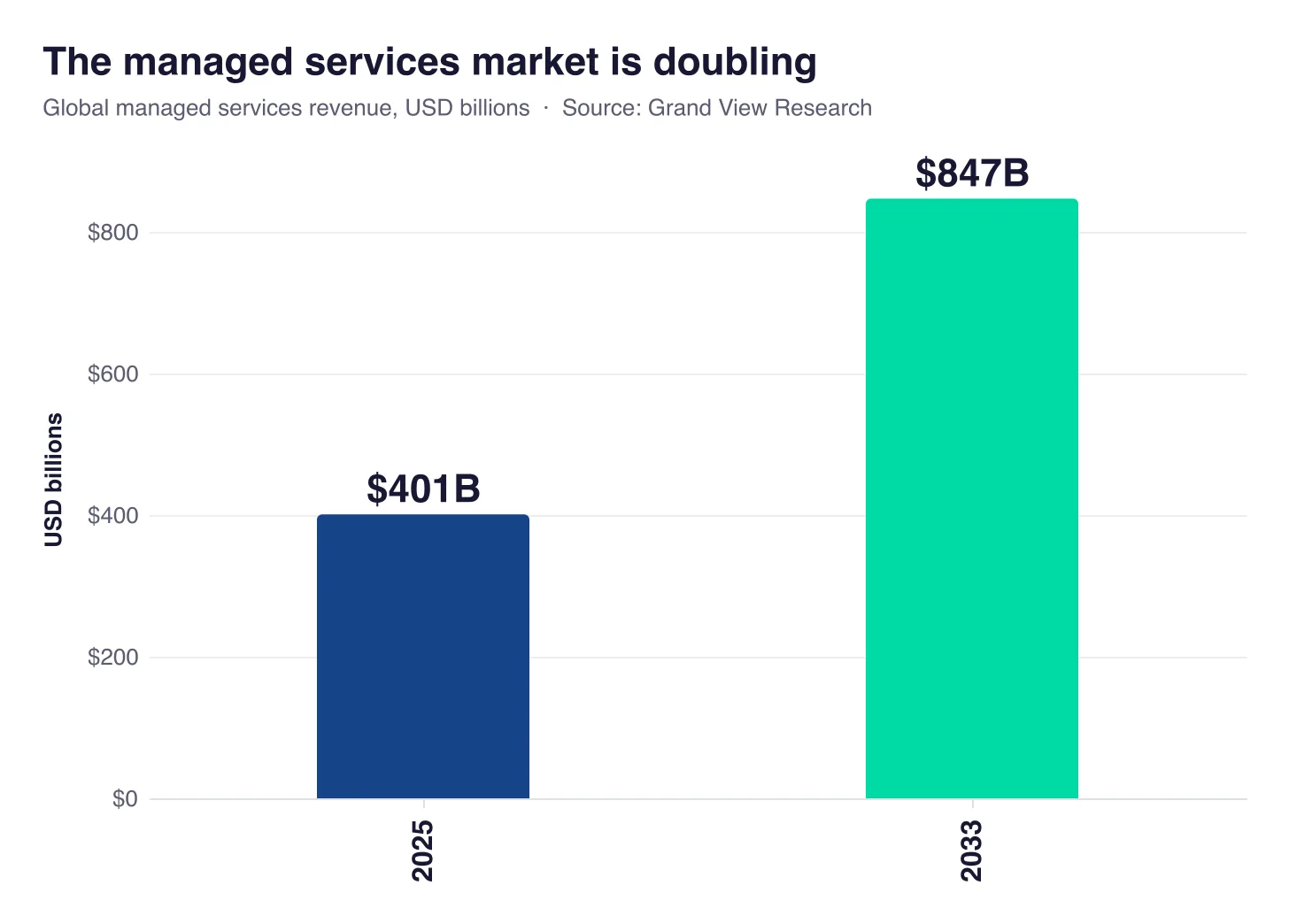
The market is doing its part. Managed services reached 401 billion dollars in 2025 and is on track to roughly double to 847 billion by 2033 (Grand View Research). Organizations keep offloading IT complexity, security keeps becoming mandatory, and cloud keeps expanding. Growth is available. The question is whether your operation can absorb it.
The managed services market is on track to roughly double by 2033. Source: Grand View Research
Gut-feel stops scaling before headcount does
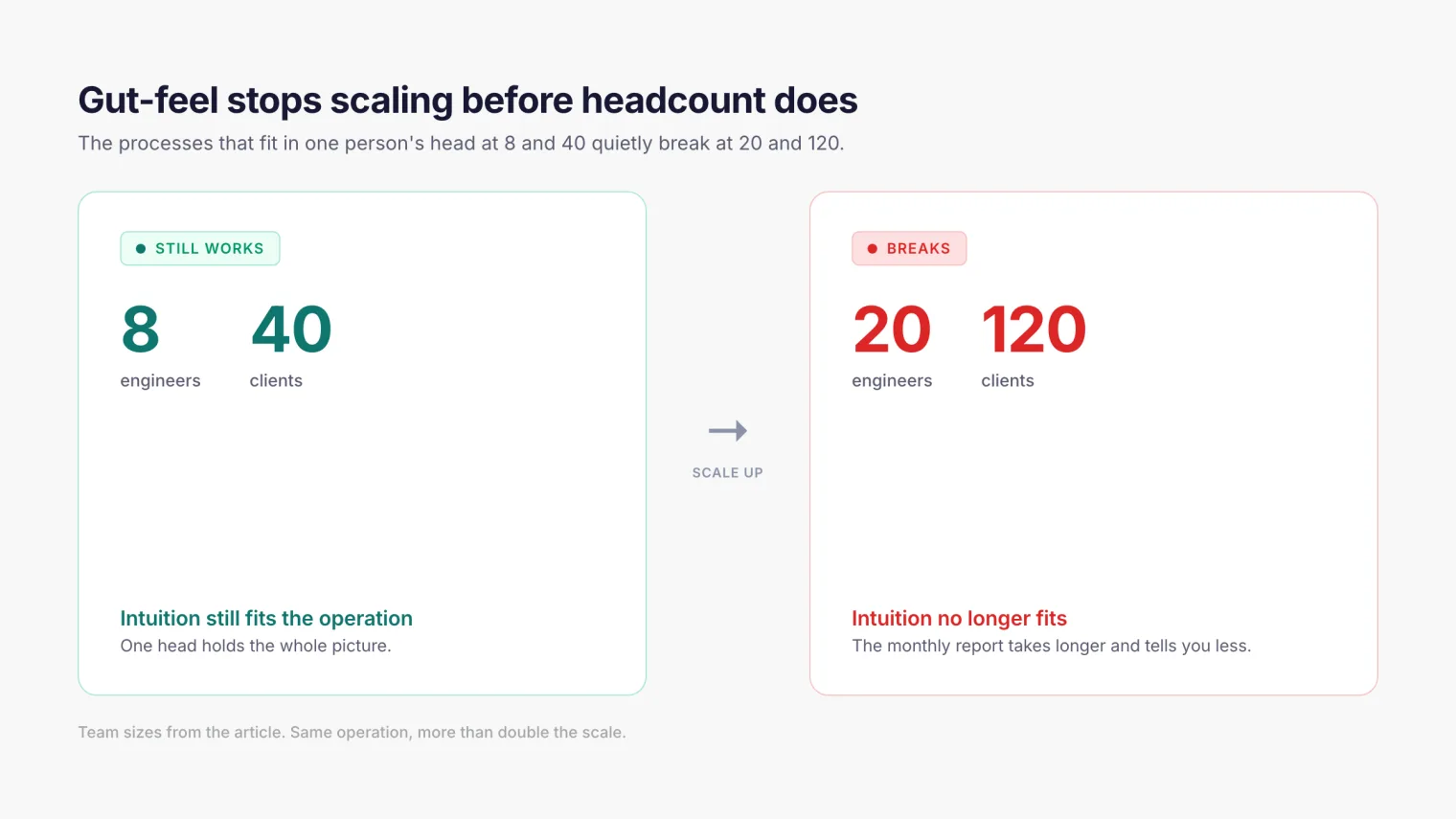
The processes that worked at 8 engineers and 40 clients quietly break at 20 and 120. What lived in one person's head no longer fits in it. The monthly report takes longer and tells you less. Decisions that used to be obvious now need data nobody has pulled together. Intuition does not scale linearly, and it usually gives out first.
Intuition does not scale linearly, and it usually gives out first.
And you cannot hire your way out
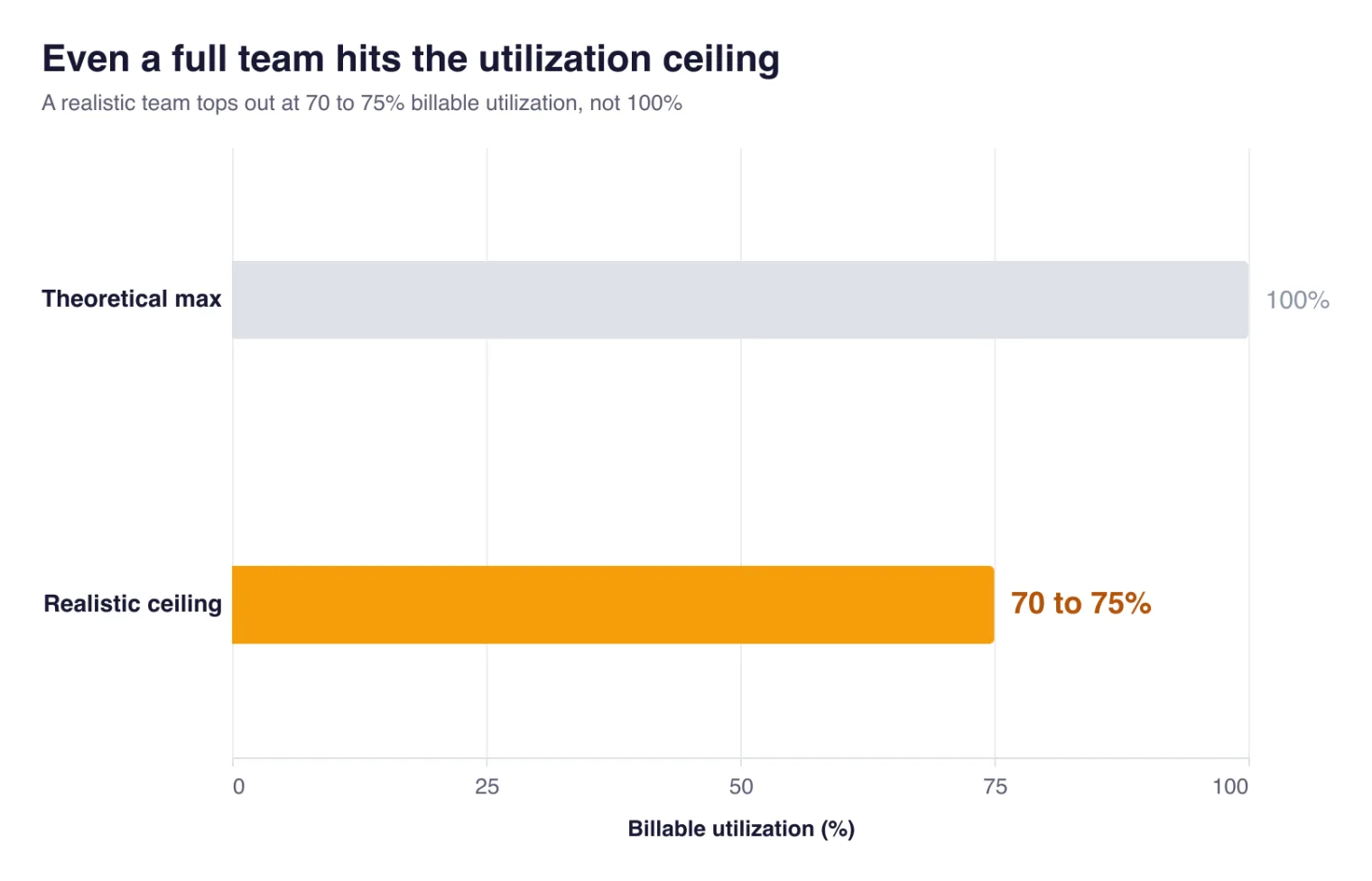
The obvious answer, more people, runs into a wall. The talent pool does not grow in proportion to the market, and even a full team hits a utilization ceiling around 70 to 75%. So the only durable way to absorb growth is leverage: doing more with the people you already have. And leverage is impossible to steer without visibility.
Even a full team hits a utilization ceiling around 70 to 75 percent.
The chaos multiplier
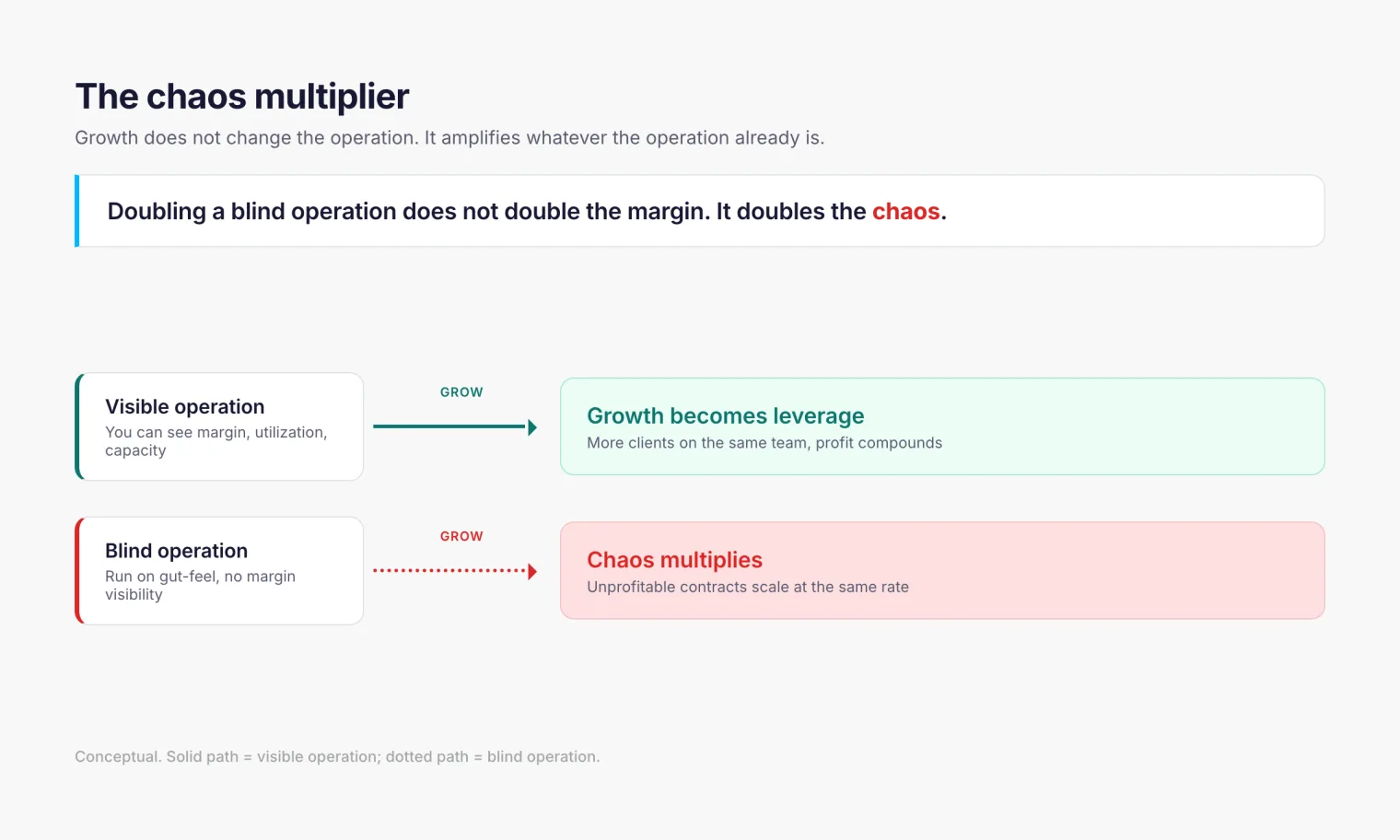
Growth on a blind operation multiplies the mess, not just the client count. Your unprofitable contracts scale at exactly the same rate as your profitable ones, and the confusion scales with them. Doubling a blind operation does not double the margin. It doubles the chaos.
Double a blind operation and you double the chaos, not the margin.
How the paradox dissolves
The paradox is not a law of nature. It only holds while the operation is invisible. The moment you can see margin per client, utilization against the ceiling, and where capacity actually goes, growth stops being chaos and becomes leverage. Same growth, opposite outcome, decided entirely by whether you can see it in time to act.
From gut-feel to data
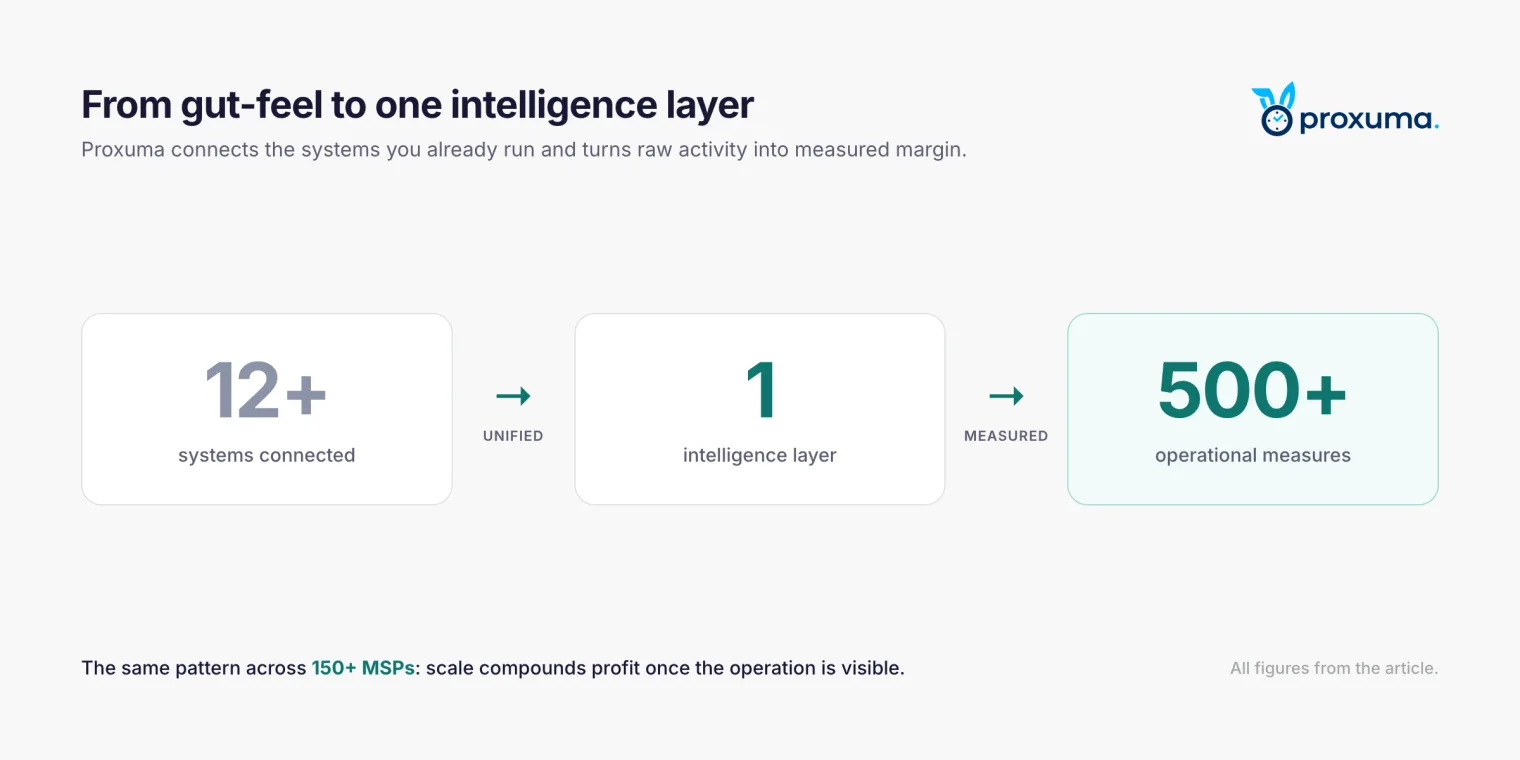
This is what Proxuma is built for. It connects 12+ systems into one operational intelligence layer, turns the raw activity into 500+ measures, and shows margin per client, per engineer, per ticket and per endpoint. Across 150+ MSPs the pattern is the same: scale only compounds profit once the operation is visible.
One operational intelligence layer turns raw activity into margin you can see.
Your PSA records the work. Proxuma understands your operation.
Is your growth becoming leverage, or chaos?
Read the whitepaper "The Intelligent MSP", or see your own operation in a 30-minute demo. The doubling is coming either way. Whether it lands as profit is up to what you can see.
// The Intelligent MSP · 2026 white paper
AI rewards the MSPs that got their data right first.
Our 2026 white paper on why most AI projects fail on bad data, what separates best-in-class MSP margins from the median, and how to turn Autotask into an AI-ready foundation, before the competition does.
✓$401B → $847B market by 2033✓80%+ of AI projects fail on data✓95% say integration blocks AI